
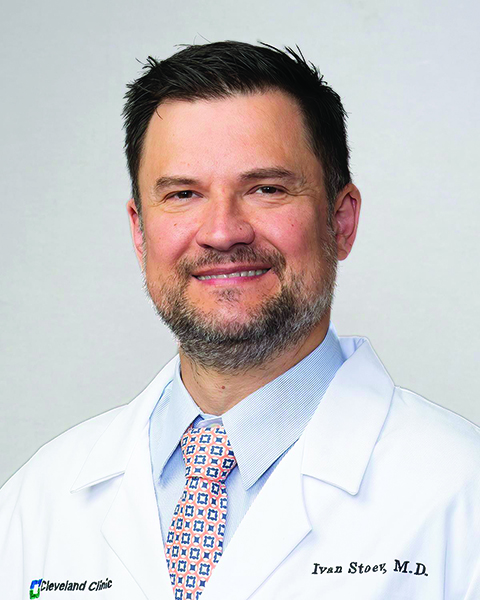
Cervical (neck) disc herniation is seen in many age groups. This problem is becoming more common as people spend hours each day with their necks bent to look at computers, tablets or cell phones. Ivan Stoev, M.D., a neurosurgeon at Cleveland Clinic Tradition Hospital, answers some commonly asked questions about herniated discs.
What Is A Herniated Disc?
The spinal column is made up of a series of bones called vertebrae. Between the vertebrae are flat, round cushioning pads called intervertebral discs, which act as shock absorbers. Each disc has a soft, rubbery center made of cartilage like our earlobes. A herniated disc ‒ also called a slipped or ruptured disc ‒ occurs when pressure from the vertebrae above and below forces some or all of the rubbery cartilage through a weakened part of the outer layer of the disc.
What Are The Symptoms Of A Herniated Disc?
Neck pain, headache, pain radiating down the arm or in the shoulder, and numbness or weakness in the fingers are all signs of a herniated disc.
How Is A Herniated Disc Diagnosed?
Your physician can order a variety of tests to determine the cause of neck or shoulder pain, such as X-rays, MRI or CT scans, sometimes with dye injected into the spinal canal. Another test is an electromyelogram (EMG), which involves placing small needles into muscles and measuring their response.
How Is A Herniated Disc Treated?
Some herniated discs improve on their own. Physical therapy, steroidal medication and traction can help improve them, as can spinal injections known as epidurals or nerve blocks. For more serious cases, surgery to decompress the nerve root and remove a small part of the disc provides pain relief. For extreme neck and arm pain, we can remove the entire disc and replace it with a bone graft or artificial disc. Most patients can resume normal activities six to eight weeks after surgery.
Call (877) 463-2010 to schedule an appointment with Dr. Stoev or another neurosurgery specialist, or visit ClevelandClinicFlorida.org/Neuro to learn more.